
This month: a new way to meet the builders and trade partners in your corner of Maine, free carpentry training starting in January, and what Washington and Augusta are taking up this winter. Plus a head start on your 2027 plan.


12 TOWNS, ONE NETWORK:JOIN US ACROSS MAINE IN 2027
This month: a new way to meet the builders and trade partners in your corner of Maine, free carpentry training starting in January, and what Washington and Augusta are taking up this winter. Plus a head start on your 2027 plan.
Every month the Home Builders and Remodelers Association of Maine (HBRAME) works to bring Maine’s builders, remodelers and trade partners into the same room. In 2027 we’re taking that literally: Nails & Networking will visit a different Maine town every month.
This issue also covers a free evening training program at KVCC that our members helped design, the federal permitting bill on Congress’s year-end list, the state code laws that took effect this summer, and how to introduce yourself to the new Legislature that convenes December 2.
 CommunityNEW FOR 2027: NAILS & NETWORKINGHBRAME's new monthly meetup visits 12 Maine towns in 2027, starting January 21.
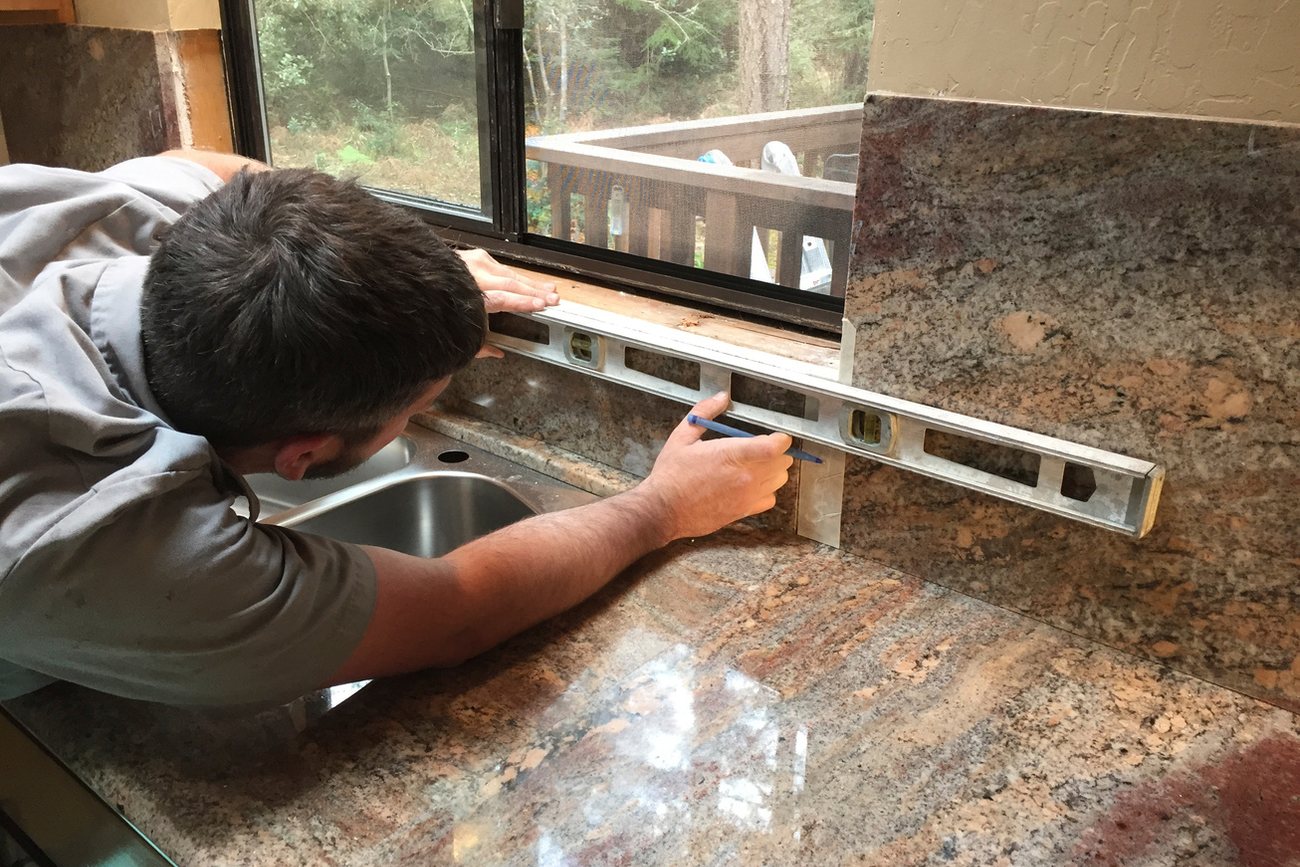 WorkforceFREE CARPENTRY TRAINING: KVCC STARTS JANUARY 12KVCC's new evening Construction Fundamentals program is free to trainees. Applications close December 1.
 Advocacy · WashingtonPERMITTING REFORM: THE LAME-DUCK WINDOWWhere S. 5653 stands, why the next few weeks matter, and how to stay engaged.
 Advocacy · AugustaNEW MAINE CODE LAWS: WHAT CHANGED IN 2026What LD 2224 and LD 2225 changed, and the January report to watch.
 Advocacy · AugustaA NEW LEGISLATURE: BUILDERS AT THE TABLEMaine's new Legislature convenes December 2. Here's how to introduce yourself.
 BusinessCLOSE OUT 2026: PLAN A STRONGER 2027A free planning guide and a builder's one-page plan for the year ahead.
Community
NEW FOR 2027:NAILS & NETWORKING
One night a month, a different corner of Maine.

HBRAME’s new Nails & Networking series brings builders and suppliers together in their own region to meet, compare notes and solve problems together. It runs on the third Thursday of every month in 2027, starting in central Maine and heading north in February.
The first two nights
- Thursday, January 21 – Augusta area: The Woodshed, Manchester
- Thursday, February 18 – Bangor area: Mason’s, Brewer
Cost: $10 per person, per night, for members and guests. Pick your night at checkout.
The full 2027 route
| Jan 21 | Augusta area |
|---|---|
| Feb 18 | Bangor area |
| Mar 18 | Lewiston/Auburn |
| Apr 15 | Sanford |
| May 20 | Brunswick |
| Jun 17 | Windham |
| Jul 15 | Rockland |
| Aug 19 | Rangeley |
| Sep 16 | York |
| Oct 21 | Saco |
| Nov 18 | Bar Harbor |
| Dec 16 | Farmington |
Venues for the later nights are announced closer to each date.
Host a night
Want to host Nails & Networking at your shop, yard or showroom? It’s a simple way to put your business in front of the builders and trade partners in your area.
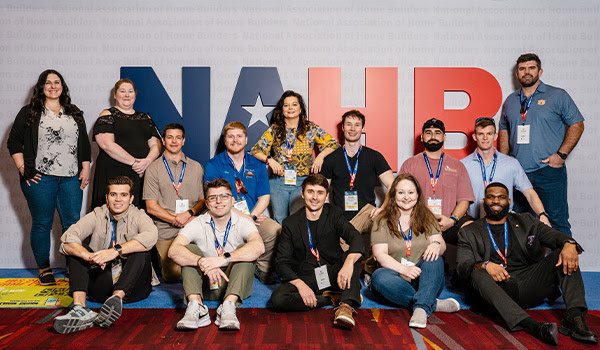
Register for Nails & Networking
Questions or want to host? Contact Heather Raisanen, HBRAME Executive Officer, at [email protected].
Sources: HBRAME events portal, portal.hbrame.org/events (schedule, cost).
Workforce
FREE CARPENTRY TRAINING:KVCC STARTS JANUARY 12
Know someone who wants to get into the trades? Here's a no-cost way in.

Kennebec Valley Community College (KVCC) is launching Construction Fundamentals, a new in-person training program for people who want to build a career in residential construction and carpentry. The 135-hour program covers the foundational knowledge and hands-on skills employers look for in entry-level workers.
| Dates | January 12 – April 29, 2027 |
|---|---|
| Schedule | Tuesday, Wednesday and Thursday evenings, 5:30–8:30 p.m. |
| Location | Nutter Building, KVCC Alfond Campus, 677 Skowhegan Rd., Hinckley |
| Cost | No cost to trainees ($2,000 value), grant funded through the Harold Alfond Center for the Advancement of Maine’s Workforce |
| Class size | 12 trainees |
| Requirements | High school diploma, GED or HiSET, plus OSHA 10 certification (applicants provide their name as it appears on the card and their OSHA card number) |
| Apply by | December 1, 2026 |
What trainees will learn
- Tool Safety
- Construction Print Reading
- Building Concepts, Leveling and Construction Math
- Building a Shed from Floor to Roof
- Roofing, Siding and Exterior Finish Work
- Stringers and Stair Basics
Please help spread the word to employees, family members, job seekers and anyone you know who’s interested in the trades. Seats are limited. Questions? Email [email protected] or visit kvcc.me.edu/workforce.
A big thank-you to the Carpentry Action Team for helping shape the program’s design and content.
Program details on KVCC's website →
Sources: KVCC program flyer and website; WorkSource Maine (Maine DOL) listing, updated Oct 13, 2026.

Advocacy · Washington
PERMITTING REFORM:THE LAME-DUCK WINDOW
After the November 3 election, Congress returns for a short lame-duck session. A bipartisan permitting bill NAHB has backed all year is near the top of the list.

Where things stand
On September 30, the Republican and Democratic leaders of the Senate’s energy and environment committees (Sens. Mike Lee, R-Utah; Shelley Moore Capito, R-W.Va.; Martin Heinrich, D-N.M.; and Sheldon Whitehouse, D-R.I.) introduced S. 5653, the Bipartisan American Affordability and Jobs Act (BAAJA). The bill reforms federal environmental review and permitting. Much of it deals with energy and infrastructure, and it also carries housing provisions NAHB pushed for. NAHB Chairman Bill Owens called it the most meaningful reform in decades to several key federal permitting programs.
The Senate left Washington without a vote. A first procedural vote is scheduled for November 9, the day the lame-duck session begins, and Sen. Capito has said negotiators want it to be among the first votes when the Senate returns. To become law, the bill still has to pass the Senate and the House and be signed by the president. Some House members have raised objections, so the details could still shift.
Why the timing matters
The lame-duck session is short: a few legislative weeks before the holidays, wrapping up the current (119th) Congress. A new Congress starts in January with new leadership arrangements, which could change the path for any deal still on the table. NAHB has told its members it views this session as the window: if the bill doesn’t pass by year’s end, NAHB does not expect a comparable package next year.
What's in it for builders (as summarized by NAHB)
- NEPA (Sec. 1102): Using federal funding alone, such as HUD loans or HOME/CDBG grants, would no longer trigger a NEPA review and the related federal reviews that come with it. Projects still in the NEPA process would get firm review deadlines.
- Clean Water Act Section 404 (Sec. 1204): Raises acreage thresholds for streamlined Nationwide Permits. NAHB estimates this saves $425,000 in permit preparation costs and a year of delay compared with an Individual Permit, and permit terms would extend from five years to ten.
- Other wins: continuity for the streamlined CWA permit program under the Endangered Species Act; letting states with enough resources handle ESA permitting for species found only within their borders; and stretching stormwater permit cycles from five years to ten.
Part of a bigger federal picture
Federal permitting has been a front-burner housing issue all year. The House passed Clean Water Act Section 404 changes NAHB supported, in the PERMIT Act, in December 2025. In February, NAHB joined a broad business coalition urging the Senate to pass comprehensive permitting reform. And this summer the 21st Century ROAD to Housing Act, a broad bipartisan housing package that includes streamlined permitting, became law. BAAJA would be the next major step.
How to stay engaged
- Reach your senators and representative. The U.S. Capitol switchboard (202-224-3121) can connect you to any member’s office. Builders’ own examples of permitting delays and costs carry the most weight.
- Meet locally. NAHB’s guide to meeting lawmakers in their home districts walks through how to set up and prepare for a visit.
- Follow the bill. NAHB posts advocacy updates as the lame-duck session unfolds.
Resources
- NAHB statement on BAAJA (Oct 1, 2026)
- NAHB advocacy: top priorities
- NAHB: How to advocate for housing in your home district
- Holland & Knight: plain-language summary of the bill
- Holland & Knight: Congress's year-end deadlines
- NACo: BAAJA advocacy hub (county perspective)
Questions about HBRAME’s advocacy? Contact Heather Raisanen at [email protected].
Sources: NAHB press release, Oct 1, 2026; NAHB member talking points on S. 5653; Holland & Knight (Oct 2026); The Hill (Sept 30, 2026); Harbinger Strategies (Oct 16, 2026); The Washington Sun; Pro Builder; U.S. Chamber coalition letter (Feb 22, 2026); Independent Electrical Contractors.
Advocacy · Augusta
NEW MAINE CODE LAWS:WHAT CHANGED IN 2026
Two new laws from Augusta are already reshaping how Maine's building code is written and enforced.

This spring the Legislature passed and the Governor signed two bills that grew out of the State’s work on regulatory barriers to housing. Both took effect July 29, 2026, the general effective date for the session’s non-emergency laws.
LD 2224: Reducing certain residential construction costs
- Directs the Technical Building Codes and Standards Board (the MUBEC board) to begin rulemaking to remove certain elevator-related requirements that add cost to residential construction.
- Has the Office of the State Fire Marshal convene a working group to study the cost and life-safety impacts of residential fire sprinkler systems, and the role of limited-use/limited-application (LULA) elevators.
- The working group reports its findings and any proposed changes to the Legislature by January 15, 2027.
LD 2225: Supporting municipal code enforcement
- Adds the ICC/Modular Building Institute 1200-2021 Standard for Off-site Construction to the codes that make up MUBEC, giving local officials a statewide standard for reviewing modular and other off-site homes.
- Strengthens training for local code enforcement officers, including training on modular and industrialized construction.
- Creates a three-year pilot program to help communities explore regional approaches to code enforcement, backed by $1 million in one-time funding in the supplemental budget.

Why it matters to you
- Watch for the board’s rulemaking. Rule changes come with public comment periods, and builders’ real-world cost examples carry weight.
- Modular and off-site builders should see more consistent review from town to town as the new standard and officer training take hold. HBRAME’s Modular Build Maine Council is the place to compare notes.
- The sprinkler working group’s report lands in January, just as the new Legislature gets to work, so expect this topic to come back in 2027.
Questions or want to get involved? Contact Heather Raisanen, HBRAME Executive Officer, at [email protected].
Sources: Maine Senate releases on LD 2224 and LD 2225 (2026); Maine Climate Council Buildings Working Group summary, June 3, 2026; testimony to the Housing and Economic Development Committee, March 2026; Maine Legislature (effective date).
Advocacy · Augusta
A NEW LEGISLATURE:BUILDERS AT THE TABLE
Every two years, Maine starts fresh in December. Here's how to make sure builders have a seat at the table.
Maine’s Legislature convenes its first regular session on the first Wednesday of December after the general election. This year that’s Wednesday, December 2. On the first day, members are sworn in and each chamber elects its leadership; committee assignments follow soon after.
The first session of a two-year Legislature is the long one. The last one ran from December into June, followed by a shorter second session the next winter and spring. Most housing and building bills go to the Joint Standing Committee on Housing and Economic Development, the committee that heard LD 2224 and LD 2225 this year.
What's already on deck for housing
- The State Fire Marshal’s residential sprinkler and elevator working group report is due January 15, 2027.
- Some 2026 housing proposals stalled but are expected back, including a bill to help towns convert vacant school buildings into housing.
- Town-meeting municipalities face a July 1, 2027 deadline to update local ordinances under Maine’s housing density and zoning law.
How you can help shape 2027
- Introduce yourself to your state senator and representative, whether they’re new or returning. A short note about your business and the homes you build in their district goes a long way.
- Invite them to a jobsite. Seeing a project in person is the fastest way for a legislator to understand permitting, code and workforce challenges.
- Testify or submit written comments. Every bill gets a public hearing, and testimony from working builders and trade partners is heard.
- Work through HBRAME. HBRAME speaks for the industry in Augusta on behalf of everyone working in Maine’s residential construction. Tell us what issues are hitting your business so we can bring them forward.
Find your legislators, bills and hearings at legislature.maine.gov →
To share an issue or get involved in HBRAME’s advocacy, contact Heather Raisanen at [email protected].
Sources: Maine House Clerk; League of Women Voters of Maine; Maine Clean Elections; Mainebiz; HBRAME July 2026 newsletter (July 1, 2027 deadline).
Business
CLOSE OUT 2026:PLAN A STRONGER 2027
The quiet weeks between Thanksgiving and New Year's are the best time to set next year's numbers.

Buildertrend points to a Construction Financial Management Association study finding that companies with financial plans earn 33% more profit than those without targets. With margins tight, a written plan is one of the few levers fully in your control.
Start with Buildertrend's free planning guide
- A checklist of what to include in your financial plan
- Four steps to build your annual plan
- The top five year-end accounting to-dos for construction teams
- Strategies to grow revenue
Then turn the plan into action
In a Buildertrend article on annual planning, custom builder Tom Cummings of SevernWoods Fine Homes shared the system he used to grow from $4 million to more than $11 million in annual revenue. A few of the habits that stood out:

- Know your “why” before the numbers. Goals stick when they’re tied to what you want the business to do for you.
- Build a one-page workback plan covering hiring, cash flow and sales, so the whole year fits on one sheet.
- Break big goals into weekly actions and check progress every week, not just at quarter’s end.
- Treat sales as a system, with a planned pipeline instead of waiting for the phone to ring.
- Review and adjust every quarter, and bring your team into the plan so they own it too.
Bring your plan to the table
Planning is easier with peers. Our first Nails & Networking nights in January are a great place to compare notes with other builders and trade partners on what’s working.
- Buildertrend annual financial planning guide (free download)
- The annual planning system that scaled a builder from $4M to $11M+
Questions? Contact Heather Raisanen at [email protected].
Sources: Buildertrend, annual financial planning guide; Buildertrend, "From $4M to $11M+" (Feb 6, 2026).
Calendar
EVENTS &SAVE THE DATES
| Thu, Nov 19 · 5:30 p.m. | Builders, Beer & Business: Wood Science Cowbell, 185 US-1, Scarborough. $10 members and guests, food included. Register → |
|---|---|
| Tue, Dec 1 | KVCC Construction Fundamentals applications close Classes run Jan 12 – Apr 29, 2027 in Hinckley. Apply → |
| December · date coming soon | Holiday Mingle & Axe Throwing The Axe Pit, 333 Clarks Pond Pkwy, South Portland. |
| Thu, Jan 21 · Thu, Feb 18 | Nails & Networking The Woodshed, Manchester, then Mason’s, Brewer. Third Thursday of every month in 2027. $10. Register → |
| Feb 2–4, 2027 | NAHB International Builders' Show (IBS) Las Vegas Convention Center. Las Vegas becomes IBS's permanent home starting in 2027. buildersshow.com → |
| Thu, July 22, 2027 · 4:00 p.m. | Annual Meeting & Lobster Bake Kennebunkport Conservation Trust. Tickets on sale January 2027. |
| Thu, Sept 23, 2027 | Tee Up for Maine Golf Tournament Nonesuch River Golf Club, Scarborough. Foursome and sponsor registration open now. Register a team → |
Want to sponsor an event, host a Nails & Networking night or bring your team? Contact Heather Raisanen, HBRAME Executive Officer, at [email protected].
BUILT ON RELATIONSHIPS.BUILT IN MAINE.
Questions about anything in this issue? Contact Heather Raisanen, HBRAME Executive Officer, at [email protected] or 207-200-6542. · hbrame.org